Easter Series Part 1: Who Is Jesus Really? Identity Before Assignment
As Easter approaches, this devotional teaching explores who Jesus is before the miracles, before the crowds, and before the cross. Discover how His identity was established before His public ministry began and what that reveals about our own identity in God.
DEVOTIONAL TEACHING
Faitheful Pen
3/22/20264 min read
Before the Miracles, Before the Cross, Before the Crowds
There is a question that has echoed through generations:
Who is Jesus?
Not just what have we heard about Him.
Not just what tradition says.
Not just the familiar answers we learned long ago.
But who is He… really?
As Easter approaches, many people begin thinking about the cross, the resurrection, and the sacrifice Jesus made. And rightly so. But before we move toward the final days of His earthly life, it is important to pause and ask a deeper question: Who was He before the miracles, before the crowds, and before the cross?
Because if we misunderstand who Jesus is, we may also misunderstand what He came to show us.
Jesus is not only a central figure in Christianity. He is not simply a teacher of morals or a man remembered for kindness and suffering. Scripture reveals something much deeper. Jesus is the visible image of the invisible God. He is the promised Messiah. He is the Word made flesh. He is fully divine, yet He willingly entered human life in a way that allowed Him to experience weariness, sorrow, rejection, hunger, and grief.
This matters more than we sometimes realize.
It means Jesus does not love us from a distance. He understands the human condition from within it. He stepped into the pain, limitations, and struggles of earthly life without sin, yet with full awareness of what it means to live in a broken world.
He knew what it was to be misunderstood by those around Him (Mark 3:21).
He knew what it was to be rejected (Isaiah 53:3; John 1:11).
He knew what it was to feel sorrow (John 11:35; Matthew 26:37–38).
He knew what it was to walk in obedience when the path was painful (Luke 22:42; Philippians 2:8).
That kind of Savior is not distant.
That kind of Savior is near.
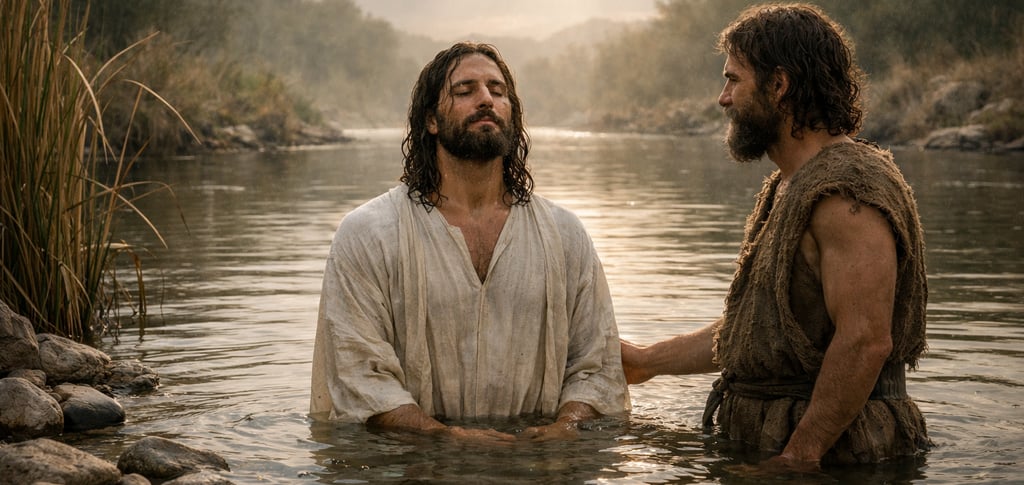
And here is something especially meaningful: before Jesus performed a single miracle or spoke to the crowds, His identity was already established. This shows us that identity comes before assignment. Who we are is not meant to be shaped by the world, by other people, or even by our own unstable thoughts. Identity begins with God. He is the one who names, forms, and affirms us. When identity comes from Him, purpose no longer becomes something we chase to prove our value. Instead, we begin to live from the security of being known by God.
So often, people spend their lives trying to build identity through accomplishment, approval, appearance, status, or usefulness. Many quietly believe they must do something significant in order to matter. But Jesus shows us another way. Before public ministry unfolded, before the miracles revealed His power, there was already affirmation. This reminds us that our value does not begin when others notice us. Our worth does not start when we become productive. God is the one who speaks first.
That truth has the power to change the way we live.
When identity comes from the world, we become fragile.
When identity comes from pain, we become guarded.
When identity comes from fear, we live in striving.
But when identity comes from God, purpose becomes an overflow rather than a performance.
This is one of the reasons Jesus still speaks so deeply to the human heart. He does not only save us from sin. He reveals what it means to be rooted in truth. He shows us what it looks like to live from the Father’s voice rather than from the pressure of the crowd.
And that may be one of the most needed reminders in our time.
We live in a world that is constantly naming people.
Too much.
Not enough.
Too broken.
Too late.
Too ordinary.
Too flawed to be used.
But Jesus stands against every false label. His life reminds us that identity is not something we invent, and it is not something the world has the right to define. Identity begins with God.
That means this question — Who is Jesus? — is not only theological. It is personal.
Because the more clearly we see Him, the more clearly we begin to understand ourselves.
If He is truly who Scripture reveals Him to be, then His life does not merely call for admiration. It calls for surrender. It invites trust. It asks us to let go of lesser voices and return to the One who formed us.
Jesus is not only the Savior who died.
He is the Son who was known.
The Lamb who was promised.
The King who came humbly.
The Word who became flesh.
The God who came near.
And before we move further into the story of what He did, we must begin with who He is.
🌸 Reflection
Take a quiet moment today and ask yourself: Whose voice has shaped my identity most?
Has it been the voice of God?
The voice of past wounds?
The voice of other people?
The voice of fear, failure, or striving?
Bring that question before the Lord and let His truth speak louder.
🌿 Closing Thought
When God defines you, purpose becomes an overflow of identity rather than a struggle for worth.
🙏 Prayer
Jesus, thank You for revealing the heart of the Father and for coming near to us in our humanity. Thank You that You are not distant from pain, sorrow, or struggle, but fully aware of what it means to live in this world. Help me see You more clearly, not only through what I have heard, but through the truth of who You are. Teach me to receive my identity from God rather than from the world, from people, or from my own fears. Let Your truth speak louder than every false label, and help me live from the security of being known by You. Amen.
🤍 Call to Action
Continue this Easter journey with us at HisWordsMinistry.com for more faith-filled encouragement and devotional teachings.
Don’t miss Part 2 next week, where we will look beyond the surface of Jesus’ miracles and uncover the compassion, authority, and deeper meaning behind His power. You may never see these familiar stories quite the same way again.
© 2025 His Words Give Life. All Rights Reserved. — Written with love by Faitheful Pen.